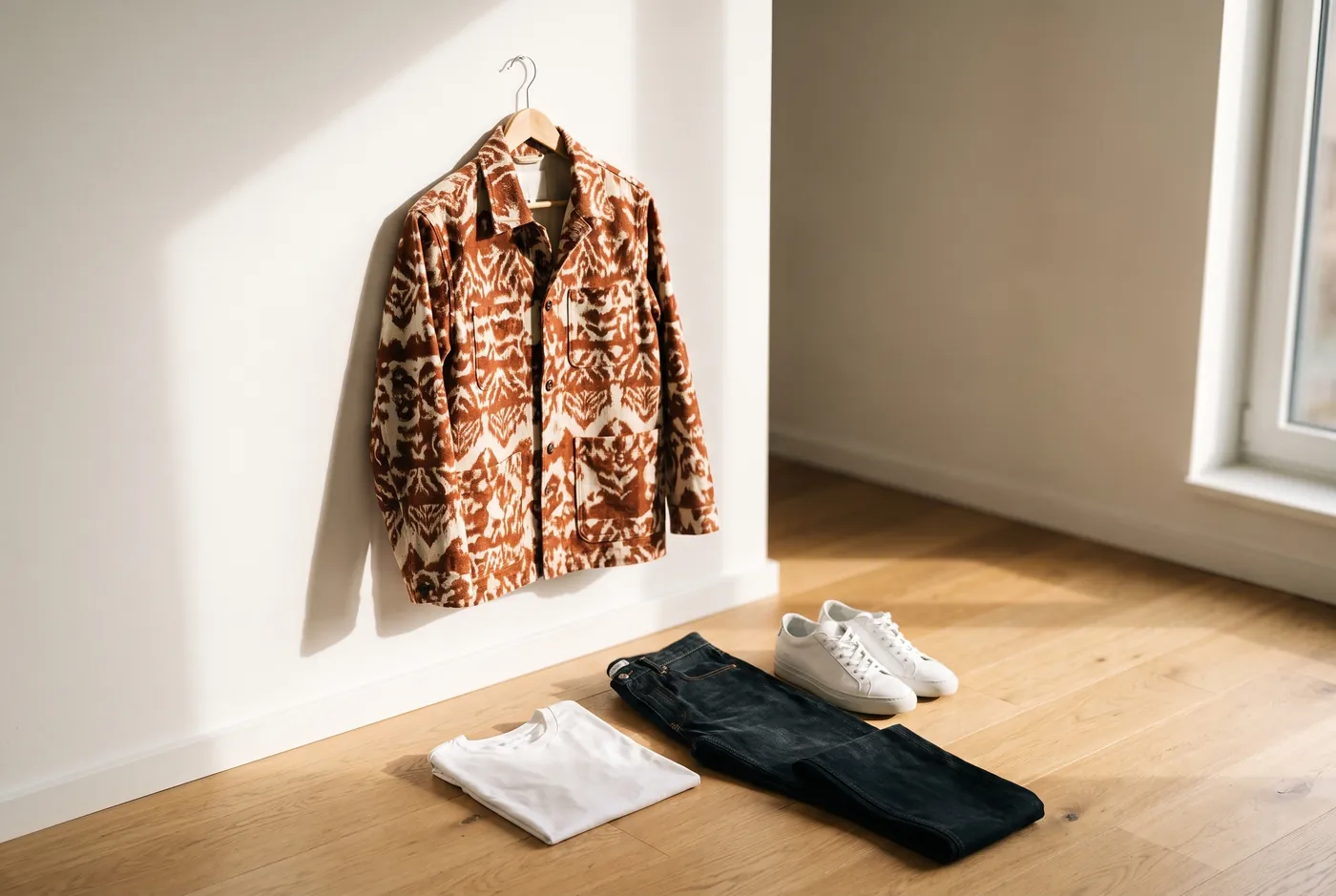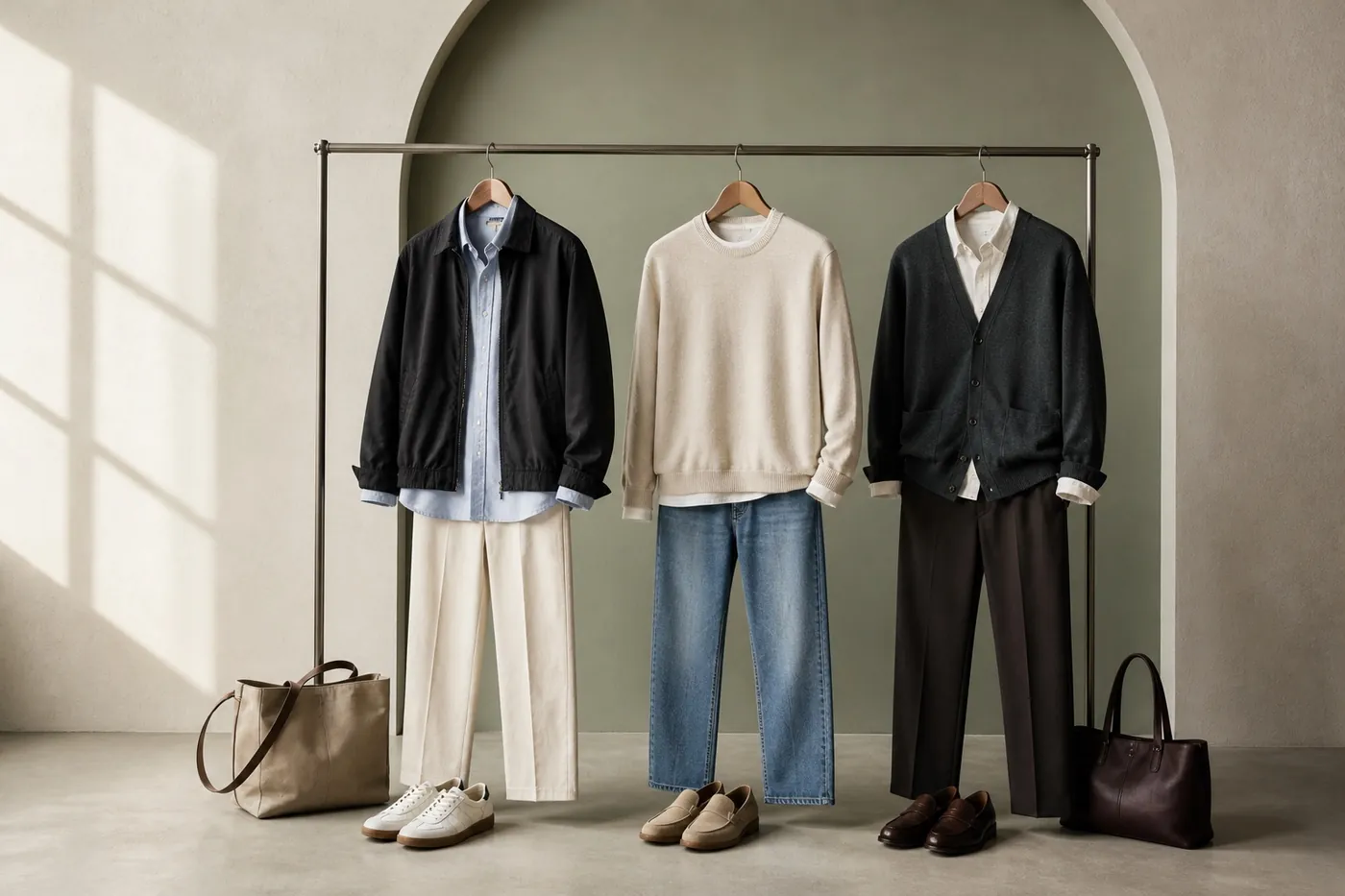

Replace the dress-code label with facts
Cocktail, smart casual and festive mean different things in different rooms. Where is it, what time does it start, will you stand or walk, what will the weather do, and how formal are the hosts?
Those answers make a useful brief, and they reveal whether the real challenge is warmth, comfort, polish or confidence.
Start from the closest suitable base
Pick the dress, suit, trouser, skirt or dark denim that already fits the event best. Then adjust the formality with what goes around it, instead of dismissing the base because you’ve worn it before.
- A structured layer sharpens a familiar base.
- A cleaner shoe changes the message more than a new top.
- One intentional accessory is often enough.
- Repeat outfits proudly when they still fit the event and you.
Ask for the actual event
In Studio, open AI ideas and pick the occasion, or type your own (“outdoor wedding, September”) and create it with AI. Essembl builds options from your wardrobe; save the strongest, then try it on early enough to check comfort.
On the day, run it through Rate my look. If something is genuinely missing, name the role precisely: borrowing or buying one versatile layer beats a whole new outfit bought under time pressure.
Key takeaways
- Dress codes get easier once you translate them into concrete constraints.
- Shoes, outerwear and grooming change familiar clothes a lot.
- A missing role is more useful than the feeling that everything is wrong.